Transforming Soil Health into
Family & School Nutrition
Hunger cannot be solved by temporary food handouts. True food sovereignty begins beneath our feet. We build chemical-free food systems that empower communities to eliminate food insecurity forever.
Why Food Security Matters
Our Resilience Track works at the intersection of soil science and human dignity, transforming depleted soils into vibrant, chemical-free food systems that nourish vulnerable households, orphans, and school-going children. We give communities the skills, tools, and agency to nourish themselves.
"Food security is meaningless if an orphaned child cannot attend school, or if a teenage mother lacks the basic nutrition to nurture her baby with dignity. When you partner with CESUD, you are investing in a holistic ecosystem where the waste from the kitchen builds the soil, the soil feeds the mother and child, and the family is empowered to rise from aid to agency."
The Food Security Track
Soil Rehabilitation
Applying minimum tillage, cover crops, and organic fertilization to revive damaged fields.
Smart Kitchen Gardens
Growing nutrient-dense, drought-resistant indigenous vegetables in small, home-based plots.
Small Livestock Integration
Integrating rabbits and poultry to provide protein and manure for organic composting.
Closed-Loop Agroecological Cycle
Healthy Soil
Rehabilitated through tillage & rotation
Kitchen Gardens
Nutrient-dense indigenous greens
Balanced Nutrition
Iron-rich meals for children & mothers
Small Livestock
Rabbits & poultry supply protein and manure
Our Impact in Numbers
Our interventions prove that localized agriculture and targeted social inclusion lead to self-reliance and environmental recovery.
Smallholder Farmers Trained
Min. Female Representation (GESI)
Project Budget Managed (Pro-Soil)
Government Ministries Partnered
Soil Rehabilitation & Conservation
Decades of intensive monoculture have depleted Kakamega's soil. We restore the earth using low-cost, high-impact agroecological practices that rebuild biological fertility.
Organic Soil Regeneration
Training families to integrate minimum tillage, crop rotation, and green cover crops to retain moisture and prevent heavy soil erosion.
The "Lead Farmer" Knowledge Loop
We leverage our network of community-based trainers to run demonstration plots, teaching smallholders to phase out expensive synthetic inputs.
Last-Mile Sustainability Mentorship
Extension officers and volunteers continue to support households post-grant, ensuring technologies are permanently maintained and adapted.
Smart Gardening & Small Livestock
We convert small, underutilized spaces around homes and schools into hyper-productive nutrient engines to combat hidden hunger and boost protein security.
Maternal & Infant Nutrition
Cultivating drought-resistant African leafy vegetables rich in iron and calcium, set up specifically for teenage mothers to ensure maternal health.
Chemical-Free Smart Inputs
Utilizing home-brewed organic fertilizers and push-pull setups for pest management, protecting crops without exposing children to chemical residues.
Small Livestock Integration
Providing poultry and rabbits which require minimal space. Droppings act as a nitrogen-rich composting base to power kitchen gardens.
Technical Competence & GESI Alignment
Our food security framework is managed by certified agricultural specialists, social workers, and strict gender compliance policies.
Donor Trust & Capacity
The GIZ Pro-Soil Legacy
CESUD demonstrated large-scale agricultural capability by successfully managing the KES 20,895,914 GOPA/GIZ Pro-Soil Project, mapping and training 7,611 smallholder farmers in soil fertility restoration across all 60 wards of Kakamega.
School-Based & Household Pilots
Recycling school kitchen scraps into bio-fertilizer to power on-site gardens that support school lunch programs, while setting up independent backyard gardens for teenage mothers.
Post-Grant Extension Continuity
Our field officers and volunteers maintain these agronomic programs entirely through local resources, showing that introduced methodologies survive long-term.
GESI Compliance & Leadership
Gender Equality & Social Inclusion (GESI)
We enforce a minimum of 60% female representation in all training programs. Teenage mothers are prioritized to gain independent food production assets, eliminating donor and aid dependency.
Project Officer - Climate Change, Waste Management & Food Security
Degree in Environmental Science
Leads conservation farming, waste-to-wealth ecosystems, and organic soil health programs.
Field Officer – Climate Change, Waste Management & Food Security
Two Positions (under Project Officer)
Spearheads climate-smart agriculture, circular economy "waste-to-wealth" initiatives, soil rehabilitation, and crop nutrition.
Project Officer for OVC & Social Advocacy
Degree in Social Work
Coordinates child protection, psychosocial support, and nutrition resources for teen mothers and orphans.
Project Field Supervisor
Diploma in Environmental Science
Coordinates extension field teams, monitors technology adoption, and ensures compliance with GESI.
Conservation Agriculture: GIZ/GOPA Framework
Implementing the standardized FAO principles of conservation farming, backed by empirical research and localized Kakamega County case studies.
The 3 Core FAO Principles
Minimum Soil Disturbance
Replacing conventional disc ploughing with basin planting, ripping, and dibble sticks (e.g. Chaka Jembe) to preserve soil structure, prevent run-off erosion, and retain organic carbon.
Permanent Organic Soil Cover
Maintaining crop residue mulching and bulking cover crops like Dolichos Lablab, Mucuna (Velvet Bean), Desmodium, and Crotalaria to prevent weeds biologically and keep the soil damp.
Crop Species Diversification
Utilizing smart rotations, intercropping, and mixed cropping with legumes to break pest cycles naturally, diversify family nutrition, and organically fix atmospheric nitrogen.
Kakamega Project Mechanics (GOPA)
As verified in the GIZ Capacity Needs Assessment, the project targeted to train 950 smallholder farmers in 19 wards through structured demonstrations, group field days, and agricultural exchange visits.
Division of Labor & Partnerships
- ▪CESUD (Lead Partner): Mobilized communities and trained Lead Farmers (LFs) in hands-on CA options and mentoring.
- ▪ADS Kakamega: Managed cover crop seed systems, bulking dolichos lab-lab, desmodium, and beans.
- ▪ATDC Bukura: Trained local artisans and fabricators to manufacture CA implements (weed scrapers, rippers).
Active Mentorship Hubs
Johnstone Malenya
Eshibeye, Lurambi Ward
A veteran adopter highlighted in the GIZ report who has practiced conservation tillage for over 15 years, proving crop yields can stabilize without heavy synthetic input dependency.
Monica Makokha
Etenje, Mumias Ward
Coordinates a local CA demonstration plot showcased for training neighbor smallholders in biological weeding, residue retention, and kitchen garden integration.
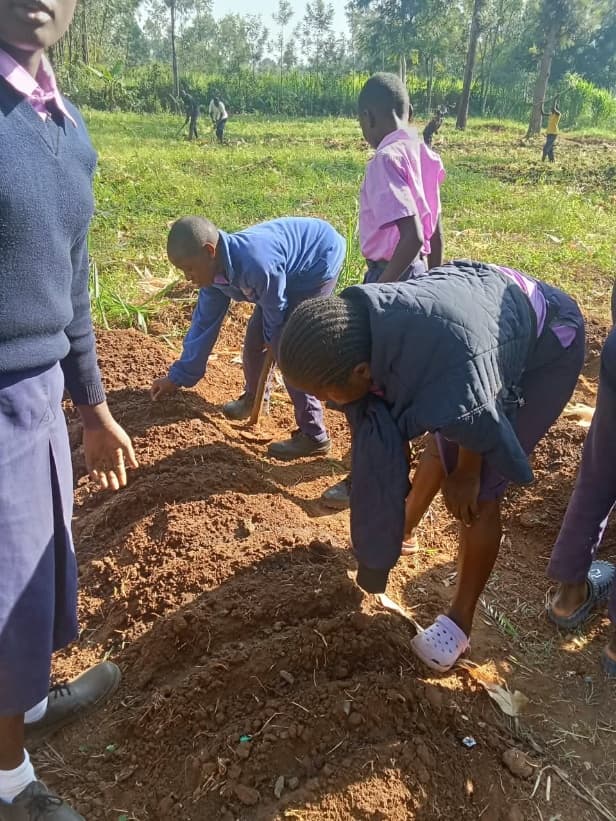
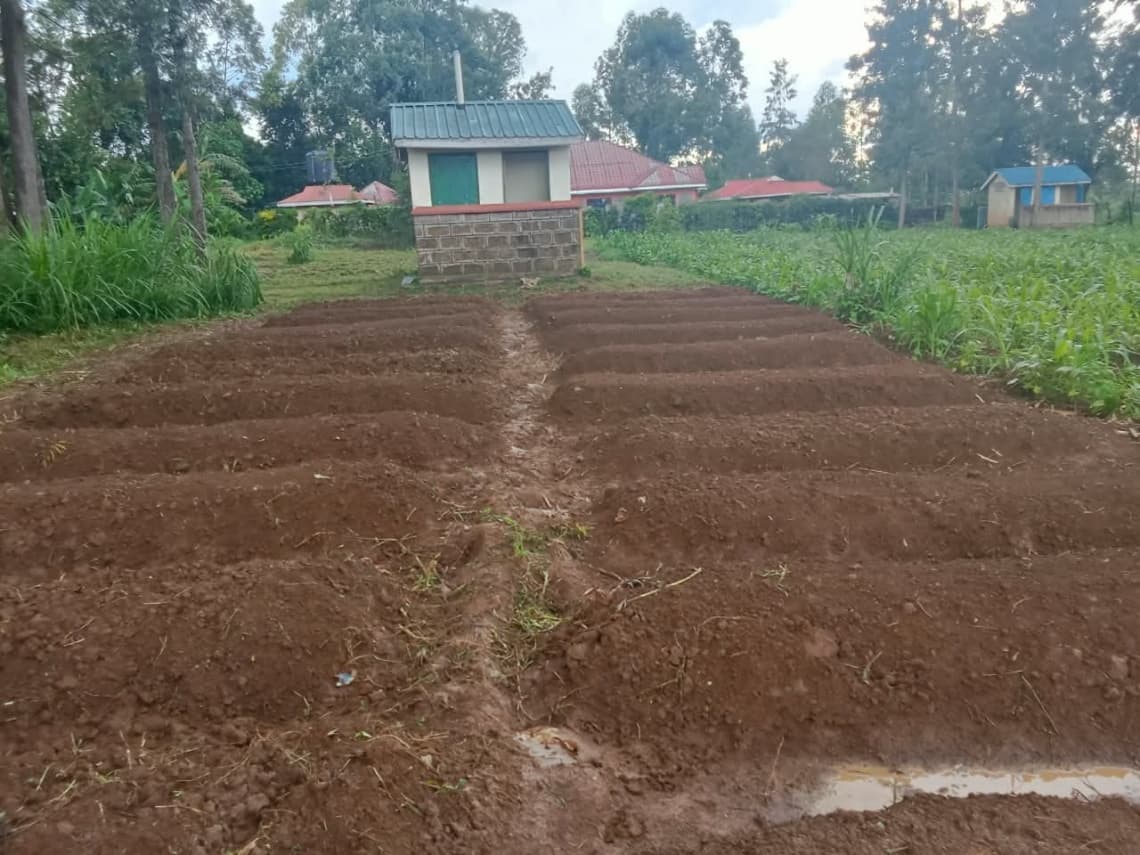
Organic Garden Revival & Raised Beds
“Empowering young minds to grow their own nutrition. Through the Organic Garden Revival initiative, students are mastering climate-smart agriculture one raised bed at a time.”
Voices from the Field
Food sovereignty is built through community agency. Read the direct testimonies of families and schools piloting the Food Security Track.
Nanjala
Age 19Mumias, Kenya
"I can feed my child fresh vegetables every day, and I am proud to be self-reliant."
Nanjala became a mother at 17, facing financial hardship and malnutrition. CESUD's Food Security team provided her with rabbit-keeping assets and assisted her in establishing a high-yield kitchen garden of African nightshade and spiderplant. Using compost from rabbit waste, her garden became highly productive. Today, Nanjala and her baby have stable nutrition, and she generates extra income by selling vegetables and breeding rabbits to other teen mothers.
Join the Movement
Empowering smallholders and young mothers begins with collective action. Discover how you can partner with CESUD to build food sovereignty.