
Building Community-Led
Adaptation Strategies
We address climate change not as an isolated environmental issue, but as a systemic challenge to food security, health, and community dignity. True conservation must grow organically from the ground up.
Why Climate Resilience Matters
Through our dedicated Resilience Track, we empower communities to shift from climate vulnerability to local agency. By merging modern environmental science with deep indigenous knowledge, we design self-sustaining adaptation models that protect Western Kenya's ecosystems for generations to come.
"When you invest in CESUD’s climate initiatives, you are funding a self-sustaining engine where waste from the kitchen feeds the garden, the garden feeds the child, and the child—restored in dignity—protects the planet."
Resilience in Practice
Lead Farmer Network
Empowering local champions to transfer conservation farming methods and run seed banks.
School Environmental Stewardship
Student Green Clubs plant trees and manage school ecosystems to combat microclimate changes.
Circular Waste-to-Wealth
Converting kitchen and agricultural waste into bio-fertilizer to power kitchen gardens.
Our Impact in Numbers
Our commitment to climate action is measured by concrete milestones. We believe in transparency and measurable environmental impact.
Smallholder Farmers Trained
Students Educated on Plastics
Project Budget Managed (Pro-Soil)
Kakamega County Wards Covered
The "Lead Farmer" Network & Agency
We don't just host standard training sessions; we build localized knowledge infrastructure that survives long after formal funding cycles wrap up.
Peer-to-Peer Technology Transfer
We identify, train, and equip local agricultural champions in conservation farming and seed banking.
Active Mentorship Hubs
Lead Farmers establish demonstration plots and volunteer their time to guide neighboring households in climate-smart adaptation.
Grassroots Continuity
Since 2021, our field officers and volunteer networks have sustained these structures entirely through internal resources.
School-Based Stewardship
We cultivate the next generation of climate leaders by embedding conservation directly into the school ecosystem through our School Dignity & Nutrition project.
Student Green Clubs
We mobilize student-led Green Clubs to spearhead waste segregation, manage localized tree nurseries, and champion plastic-free learning.
Microclimate Restoration
Students learn biodiversity stewardship by planting fruit and indigenous trees on grounds, improving soil and feeding programs.
Circular "Waste-to-Wealth"
Composting kitchen and farm waste converts organic materials into nutrient-rich bio-fertilizer to power climate-resilient kitchen gardens.
Technical Competence & Compliance
Our field interventions are backed by strict policy guidelines, certified execution capacity, and a dedicated multi-disciplinary leadership team.
Donor Trust & Program Execution
GOPA/GIZ Pro-Soil Excellence
CESUD successfully managed the KES 20,895,914 Pro-Soil Project, mapping, mobilizing, and training 7,611 smallholder farmers across all 60 wards of Kakamega County in soil fertility restoration and conservation agriculture.
Proven Extension Persistence
Since 2021, our field extension officers and volunteers have maintained these agricultural networks entirely through internal resource mobilization, demonstrating structural permanence.
Plastic-Free Learning Campaigns
Facilitated hands-on school cleanups and educational forums reaching over 1,000+ students to eliminate toxic open plastic burning practices.
Governance & Leadership Team
Environmental Waste & Climate Policy
We adhere to a strict "Do No Harm" approach. Interventions must actively improve soil health, prevent chemical runoff, discourage single-use plastics, and match UN Sustainable Development Goals (SDGs) reporting standards.
Project Officer - Climate Change, Waste Management & Food Security
Degree in Environmental Science
Directs circular economy (3Rs), conservation farming, tree nurseries, and UN SDG reporting alignment.
Field Officer – Climate Change, Waste Management & Food Security
Two Positions (under Project Officer)
Spearheads climate-smart agriculture, circular economy "waste-to-wealth" initiatives, soil rehabilitation, and crop nutrition.
Project Field Supervisor
Diploma in Environmental Science
Coordinates day-to-day community field operations, tree nursery quality, and Lead Farmer mentorship compliance.
Green Clubs & Climate-Smart Agriculture
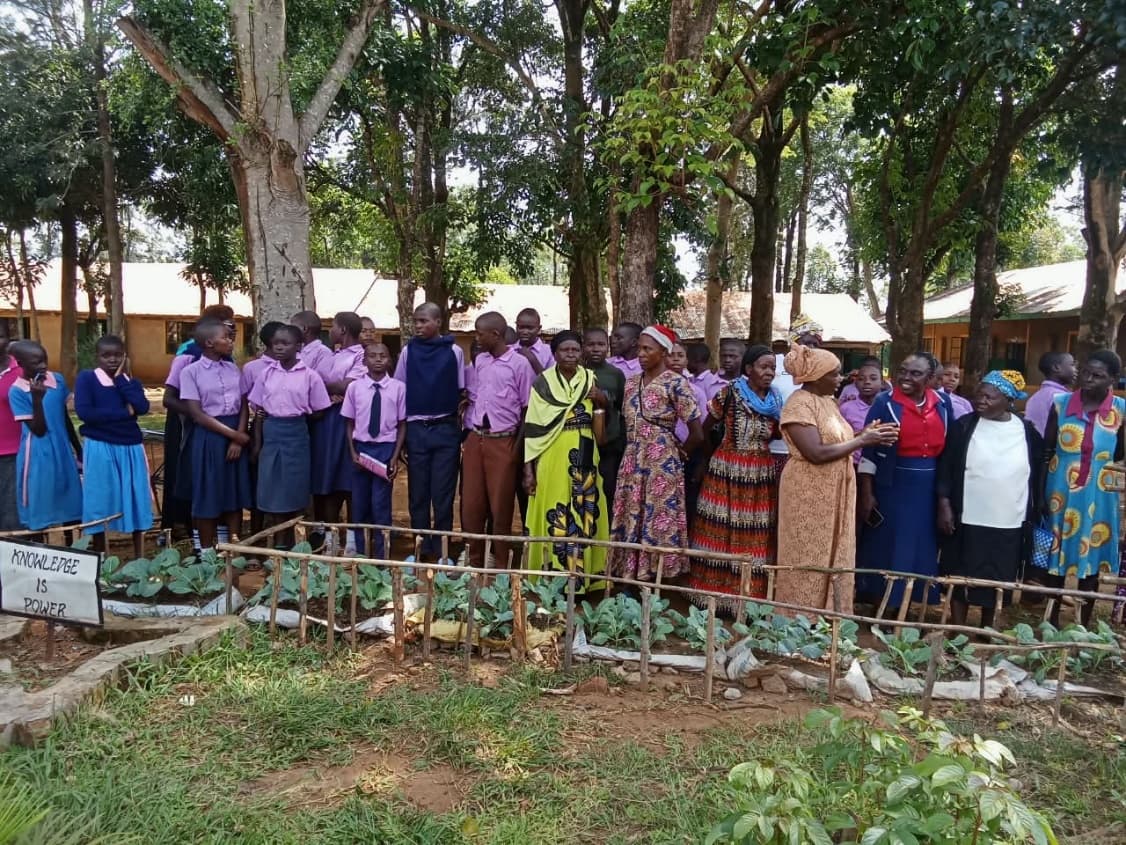
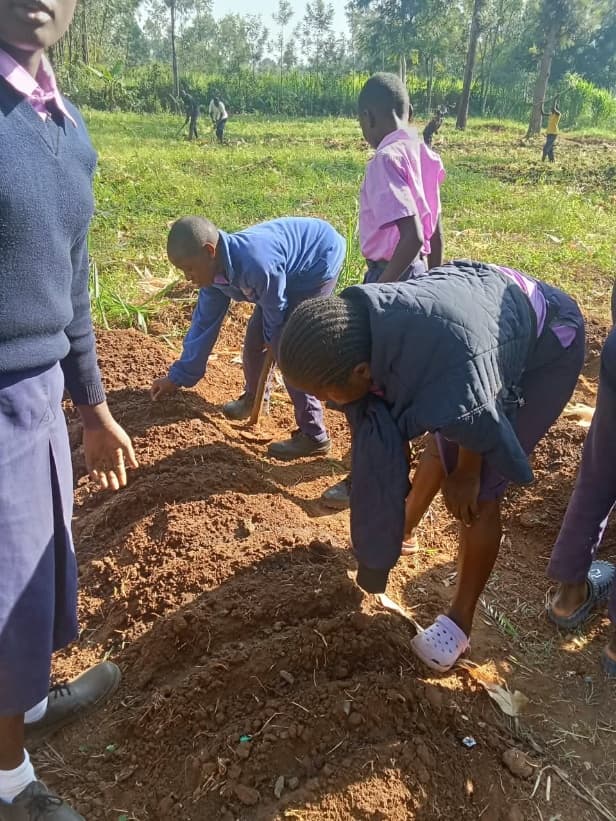
“The CESUD team met with our vibrant Green Clubs, dedicated teachers, and students to conduct a hands-on demonstration on setting up and managing sustainable school kitchen gardens.”
Voices from the Field
Empowering farmers and students builds lasting ecological change. Read testimonies of the communities driving the Resilience Track.
John Wekesa
Age 42Likuyani, Kenya
"The Lead Farmer network changed how we view our soil. My demo plot now supports twenty of my neighbors."
John Wekesa was one of the 7,611 farmers trained under the GOPA/GIZ Pro-Soil Project in Kakamega. Initially struggling with low crop yields due to soil acidity, John adopted conservation agriculture and organic composting. Today, his farm serves as an Active Mentorship Hub. He volunteers his time to teach neighboring households how to restore soil health and save seeds, proving that grassroots knowledge transfer is the most sustainable path to climate resilience.
Join the Movement
Environmental stewardship begins with collective action. Discover how you can partner with CESUD to build climate resilience.